
Top E-commerce Software Solutions for 2026
Top E-commerce Software Solutions for 2026
The eCommerce industry continues to evolve rapidly. New technologies, changing customer expectations, AI-driven automation, and global competition are pushing businesses to rethink how they sell online.
Choosing the right ecommerce software is no longer simply about launching a website. Today's merchants need platforms that help them sell faster, manage operations efficiently, optimize conversions, and scale internationally.
With dozens of platforms available, selecting the right solution can be overwhelming.
This guide explores the top eCommerce software solutions for 2026, compares leading platforms, and explains how to choose the best option for your business.
Why Choosing the Right Ecommerce Software Matters
Your eCommerce platform becomes the foundation of your business.
The software you choose impacts:
- Store performance
- Customer experience
- Conversion rates
- Marketing capabilities
- Scalability
- Operational efficiency
- International expansion
A strong platform helps you grow.
The wrong platform can create limitations that become expensive and difficult to overcome later.
This is why understanding the available ecommerce software solutions is critical before launching or scaling an online business.
What Is Ecommerce Software?
Ecommerce software is a platform that enables businesses to create, manage, and operate online stores.
Most solutions provide:
- Product management
- Inventory tracking
- Checkout systems
- Payment processing
- Order management
- Customer accounts
- Marketing tools
- Analytics
Modern platforms are also increasingly integrating artificial intelligence, automation, personalization, and conversion optimization tools.
The best ecommerce software combines usability, flexibility, and growth potential.
Top Ecommerce Software Solutions for 2026
1. xPage
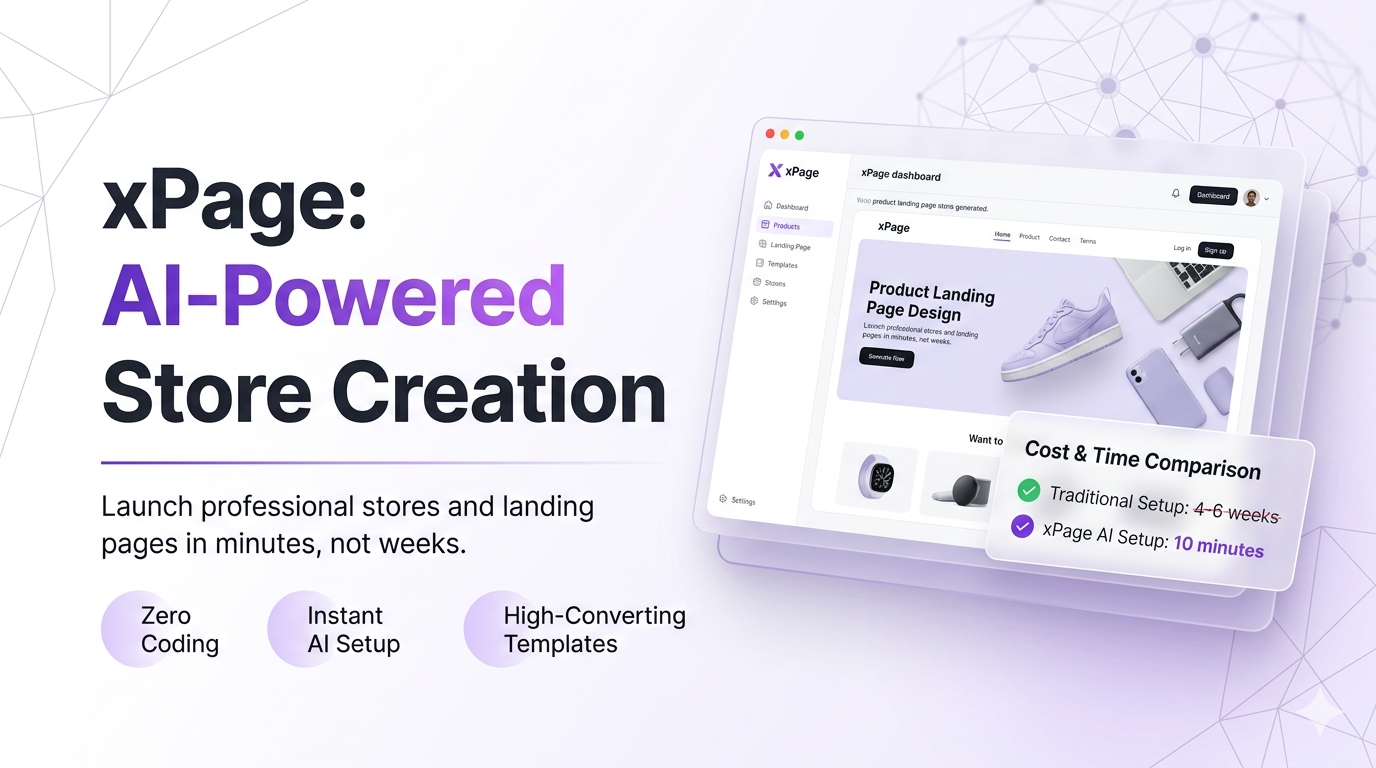 xPage is one of the fastest-growing AI-powered eCommerce platforms focused on helping merchants launch stores and landing pages quickly.
Unlike traditional website builders, xPage is designed around modern eCommerce workflows.
Its strengths include:
- AI-powered store creation
- High-converting landing pages
- Fast product launches
- Simplified store setup
- Conversion-focused design
- International selling capabilities
One of the biggest challenges merchants face is spending too much time building rather than selling.
xPage helps reduce setup complexity by allowing users to generate professional stores and product pages faster through AI-assisted workflows.
For entrepreneurs focused on speed, testing products, and launching quickly, xPage is becoming one of the most interesting ecommerce software solutions available.
2. Shopify
Shopify remains one of the most recognized names in eCommerce.
The platform offers:
- Extensive app ecosystem
- Strong checkout infrastructure
- Multi-channel selling
- Enterprise scalability
- Large developer community
Shopify is often considered among the best ecommerce software options for established brands and growing businesses.
However, merchants frequently rely on multiple third-party apps, which can increase costs and operational complexity.
3. WooCommerce
WooCommerce powers millions of online stores through WordPress.
Advantages include:
- Open-source flexibility
- Full customization
- Large plugin ecosystem
- Strong content marketing integration
WooCommerce works well for businesses that want complete control over their websites.
However, it often requires more technical management than hosted solutions.
4. BigCommerce
BigCommerce is designed for businesses seeking scalability and enterprise-grade capabilities.
Key features include:
- Multi-channel commerce
- Advanced product catalogs
- International selling
- B2B capabilities
- Strong performance
It is particularly attractive for larger businesses with complex operational requirements.
5. Wix eCommerce
Wix has expanded significantly in recent years.
Its strengths include:
- User-friendly website building
- Beginner-friendly setup
- Integrated design tools
- Simple store management
Wix is often suitable for smaller businesses and entrepreneurs launching their first online store.
Ecommerce Software Comparison
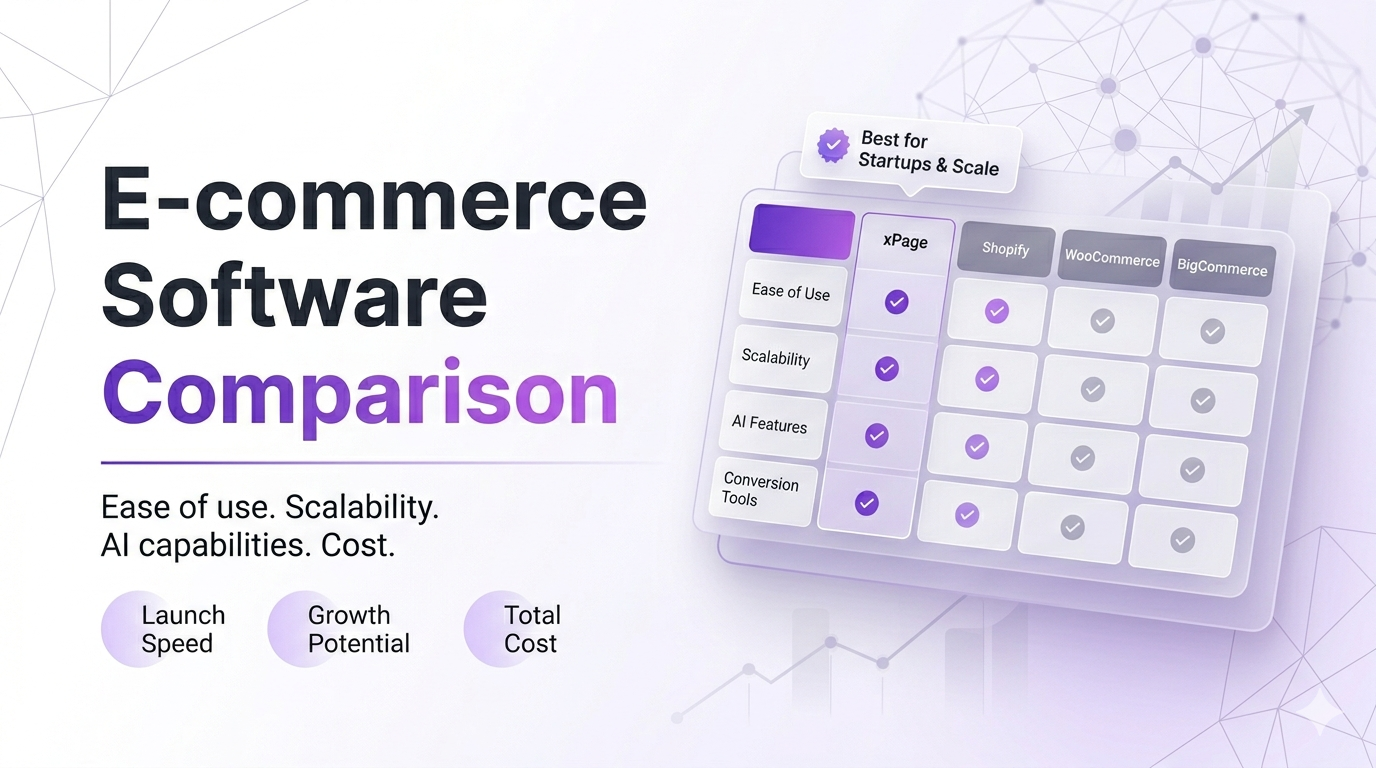
An effective ecommerce software comparison should evaluate more than just features.
Businesses should consider:
Ease of Use
Can you launch quickly?
Platforms like xPage and Wix focus heavily on reducing setup complexity.
Scalability
Can the platform grow with your business?
Shopify and BigCommerce are often chosen for long-term scalability.
Customization
How much control do you need?
WooCommerce offers extensive flexibility, while hosted platforms prioritize simplicity.
AI Capabilities
Artificial intelligence is becoming increasingly important.
AI-powered tools can assist with:
- Store creation
- Product descriptions
- Landing pages
- Marketing content
- Customer experiences
Platforms such as xPage are helping merchants leverage AI throughout the store-building process.
Cost
Software costs extend beyond monthly subscriptions.
Businesses should consider:
- App costs
- Transaction fees
- Development expenses
- Maintenance costs
The cheapest platform is not always the most cost-effective long-term solution.
How to Choose Ecommerce Platform
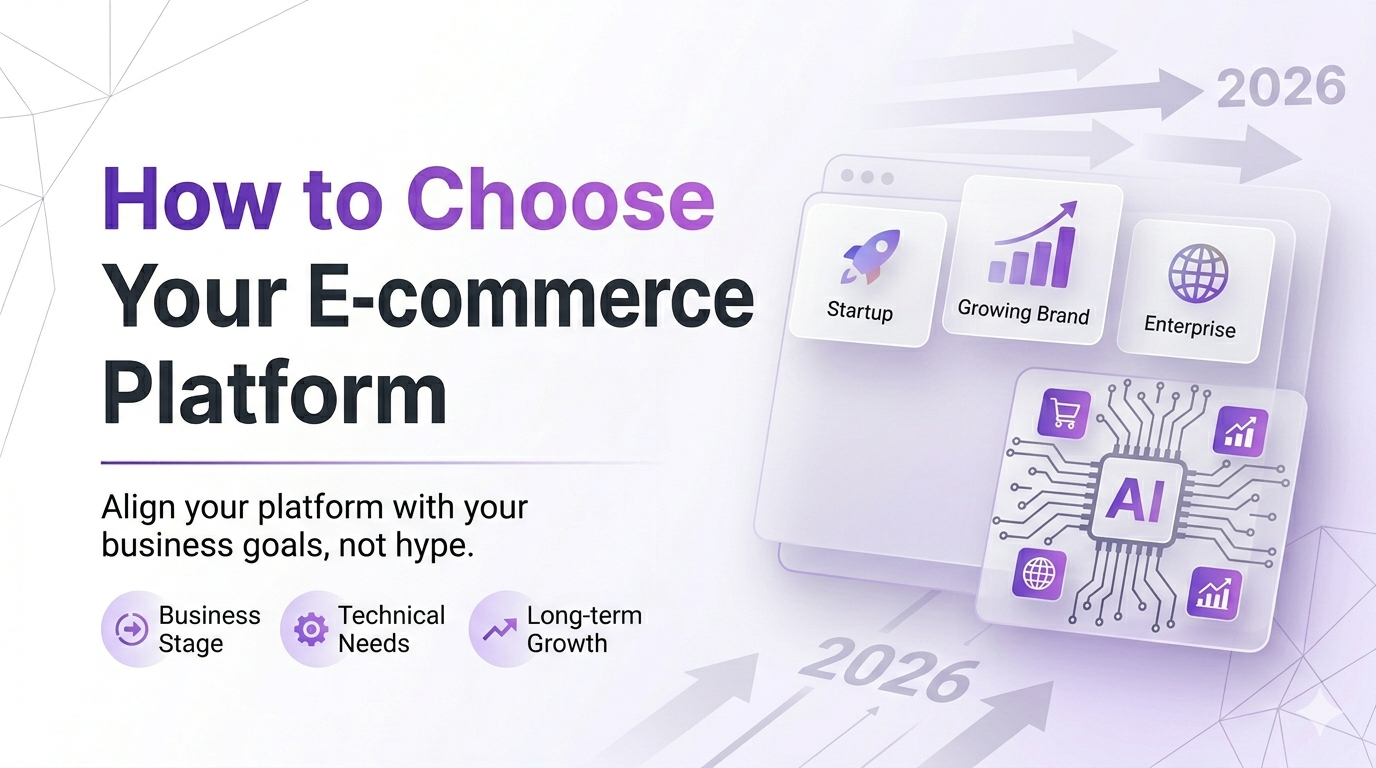 Many entrepreneurs struggle with how to choose ecommerce platform options because every provider claims to be the best.
The right choice depends on your goals.
Consider Your Business Stage
A startup launching its first store has different needs than a large enterprise.
Questions to ask:
- Are you just starting?
- Are you scaling rapidly?
- Do you need advanced features?
- Will you sell internationally?
Your growth stage should influence your decision.
Define Technical Requirements
Some platforms require more technical involvement than others.
If you want minimal setup and faster deployment, AI-powered solutions may be a better fit.
If you need deep customization, open-source options may be more appropriate.
Evaluate Conversion Tools
Traffic alone does not create revenue.
The best ecommerce solution should help convert visitors into customers.
Look for:
- Optimized checkout flows
- Mobile responsiveness
- Landing page capabilities
- Upsells and cross-sells
- Conversion-focused design
Think Beyond Launch Day
Many businesses choose platforms based only on initial setup.
Instead, consider:
- Future growth
- Marketing needs
- Expansion plans
- Product catalog size
- Team collaboration
Long-term flexibility is often more important than short-term convenience.
What Makes the Best Ecommerce Software?
The best ecommerce software combines multiple factors:
- Ease of use
- Scalability
- Reliability
- Conversion optimization
- Automation
- AI integration
- Customer support
There is no universal solution for every business.
The best platform is the one that aligns with your specific goals.
For some businesses, Shopify offers the ecosystem they need.
For others, WooCommerce provides flexibility.
For merchants prioritizing speed, AI automation, and modern selling workflows, xPage offers a compelling alternative.
Best Ecommerce Solution for Different Business Types
Startups
Recommended:
These platforms allow faster deployment and lower technical barriers.
Growing Brands
Recommended:
These solutions support scaling operations while maintaining performance.
Content-Driven Businesses
Recommended:
Businesses relying heavily on content marketing often benefit from WordPress integration.
Product Testing and Dropshipping
Recommended:
Fast landing page creation and rapid deployment become especially important in testing environments.
Future Trends in Ecommerce Software
Several trends are shaping the future of eCommerce.
AI-Powered Store Creation
Store creation is becoming increasingly automated.
Merchants no longer need to build every page manually.
Personalized Shopping Experiences
AI is helping businesses create personalized recommendations and customer journeys.
Faster Launch Times
Entrepreneurs want to move from idea to live store faster than ever.
Integrated Commerce Ecosystems
Platforms are increasingly combining:
- Store creation
- Payments
- Marketing
- Analytics
- Customer management
into a unified experience.
Final Thoughts
Choosing the right ecommerce software can significantly impact your success in 2026 and beyond.
The market offers many strong options, including Shopify, WooCommerce, BigCommerce, Wix, and emerging AI-powered platforms like xPage.
When conducting an ecommerce software comparison, focus on:
- Ease of use
- Growth potential
- AI capabilities
- Conversion tools
- Total cost of ownership
If you're wondering how to choose ecommerce platform solutions, start by evaluating your business goals, technical requirements, and growth plans.
For merchants looking for a modern, AI-powered approach to launching stores and landing pages, xPage represents one of the most promising ecommerce software solutions available today.
The future of eCommerce belongs to businesses that can launch faster, adapt quicker, and deliver better customer experiences—and the right software platform makes all the difference.