
The First AI Employee Every Ecommerce Brand Should Hire
The First AI Employee Every Ecommerce Brand Should Hire
Every successful ecommerce business depends on people.
Not just one or two people—but an entire team of specialists working together to turn ideas into revenue. Designers create visual experiences. Copywriters craft persuasive messaging. Developers build websites. Marketers generate traffic. Analysts interpret data. Customer support teams solve problems. Brand strategists shape perception. Conversion experts improve sales.
The reality is that building an online business has never been about simply launching a website.
It's about coordinating dozens of different roles, each contributing to the customer experience.
For large companies, that's manageable. They hire specialists, build departments, and invest in expertise.
For small businesses and startups, it's a different story.
Most entrepreneurs wear every hat themselves. One moment they're designing a homepage. The next they're answering customer emails, writing product descriptions, analyzing ad performance, and planning their next product launch.
That constant context switching slows growth and creates burnout.
Artificial intelligence is changing this equation.
Not because AI replaces people.
But because AI can become the first employee every ecommerce business hires.
Instead of acting as another software tool, AI is evolving into an operating partner—one capable of assisting across multiple disciplines simultaneously while enabling founders to focus on the decisions that matter most.
This is the future of AI ecommerce.
And it's reshaping what it means to build an AI business.
1. The Most Valuable Ecommerce Employee Doesn't Exist
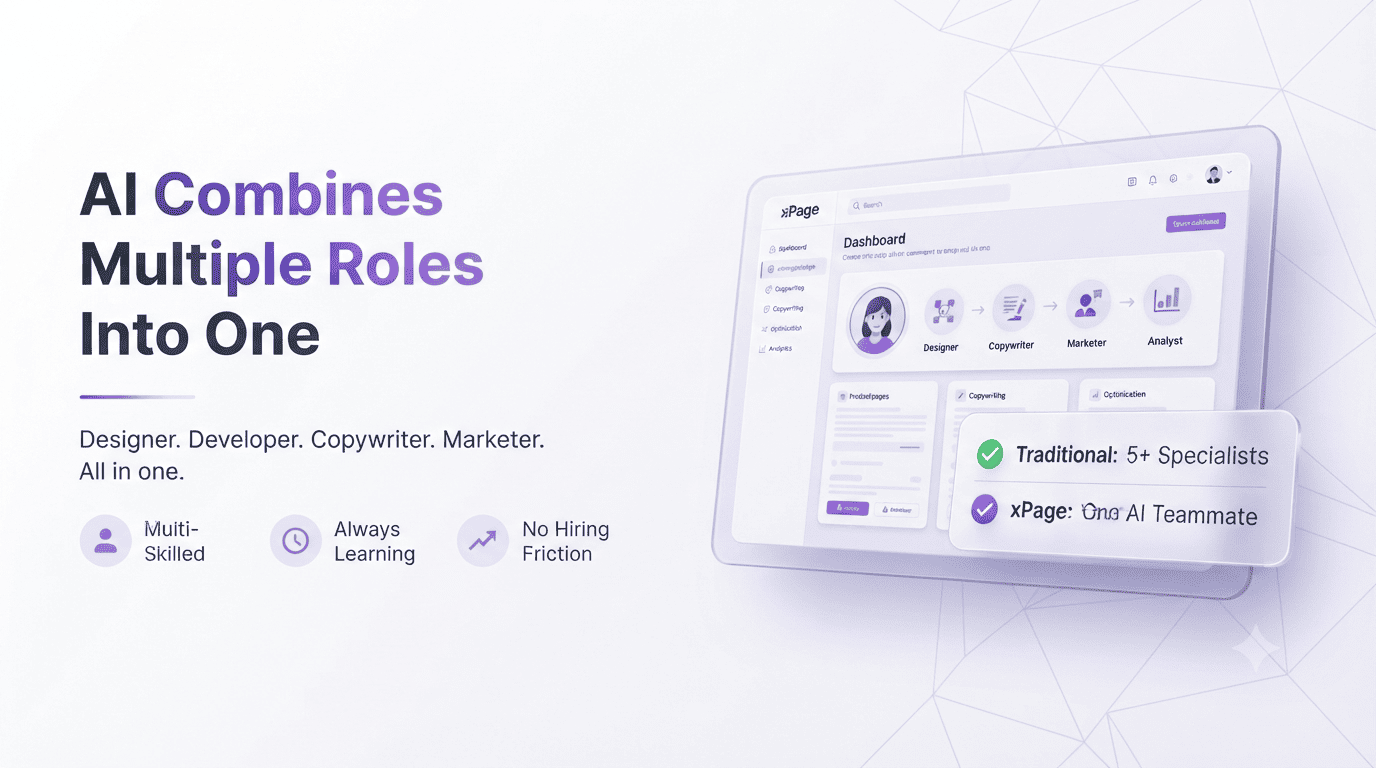
Imagine hiring a single employee who could:
- Research your competitors.
- Brainstorm new product ideas.
- Write persuasive product descriptions.
- Generate marketing campaigns.
- Design landing pages.
- Improve website copy.
- Analyze customer behavior.
- Recommend pricing strategies.
- Suggest new offers.
- Identify conversion bottlenecks.
- Help optimize advertising creative.
- Assist with email marketing.
- Support branding decisions.
- Monitor performance and recommend improvements.
No individual possesses every one of these skills at an expert level.
Traditionally, businesses solve this problem by hiring specialists.
As companies grow, they add:
- Marketing managers
- Graphic designers
- Developers
- SEO specialists
- Copywriters
- Brand strategists
- Conversion rate optimization experts
- Analysts
- Customer support teams
- Operations managers
Each role adds value.
Each role also adds cost, communication overhead, and complexity.
For most ecommerce entrepreneurs, hiring an entire team isn't realistic.
That's why growth often stalls—not because founders lack ideas, but because execution becomes overwhelming.
The challenge has never been ambition.
It's capacity.
2. AI Is Becoming an Operating Partner
Early AI tools focused on isolated tasks.
Write a paragraph.
Generate an image.
Translate text.
Summarize information.
Useful, but limited.
Today's AI is becoming something much larger.
Rather than completing disconnected tasks, AI is beginning to understand workflows.
It remembers context.
Connects information.
Makes recommendations.
Suggests improvements.
Learns from feedback.
This changes the relationship between entrepreneurs and technology.
Instead of opening separate tools for design, writing, analytics, and planning, founders increasingly collaborate with one intelligent system capable of supporting multiple business functions.
Think of AI less like software.
Think of it more like an exceptionally capable colleague.
An operating partner doesn't replace expertise.
It amplifies it.
It helps entrepreneurs move faster, make better decisions, and execute with greater confidence.
This is where AI automation becomes truly valuable.
Automation isn't simply about reducing manual work.
It's about enabling smarter work.
Rather than automating individual tasks, AI begins connecting every stage of building and growing an ecommerce business into one continuous workflow.
3. Why This Changes Entrepreneurship
Entrepreneurship has always rewarded people who can execute.
The challenge is that execution demands time.
Every hour spent formatting product pages is an hour not spent speaking with customers.
Every afternoon spent rewriting headlines is time not invested in strategy.
Every repetitive task creates opportunity cost.
Artificial intelligence changes this dynamic.
Founders no longer need to personally perform every operational activity.
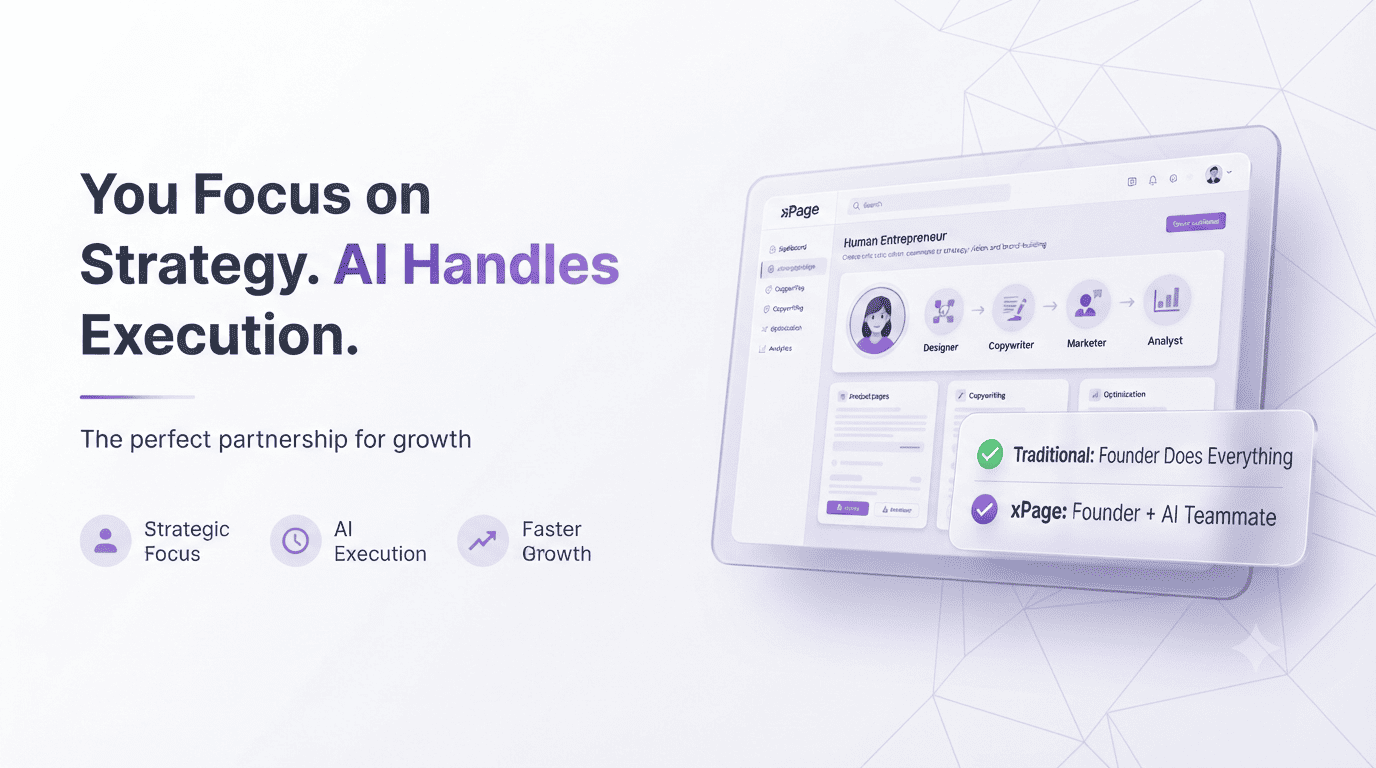
Instead, they increasingly manage AI systems that assist with execution across the business.
That shift is significant.
The entrepreneur's role evolves from operator to manager.
Instead of asking:
"What should I finish today?"
Founders begin asking:
"What should AI handle while I focus on higher-value decisions?"
This creates several advantages.
More Time for Strategy
Entrepreneurs spend more time understanding markets, identifying opportunities, and improving products.
Faster Experimentation
New ideas can be launched quickly without waiting weeks for implementation.
Better Decision-Making
AI surfaces insights that help founders prioritize what matters most.
Reduced Operational Friction
Routine work becomes dramatically easier, allowing businesses to move faster with fewer resources.
The future entrepreneur isn't replaced by AI.
They're empowered by it.
4. AI Changes Store Creation
Store creation has traditionally been treated as the primary challenge in ecommerce.
Choose a theme.
Customize layouts.
Upload products.
Install plugins.
Configure checkout.
Publish.
But launching a store has never guaranteed building a successful business.
A website is infrastructure.
A business is an ecosystem.
That's why the next generation of the AI store builder is fundamentally different.
Instead of asking users to manually assemble every component, AI helps shape the entire business around the customer.
A modern AI ecommerce platform should help entrepreneurs:
- Build differentiated brands
- Define customer personas
- Create persuasive messaging
- Generate high-converting landing pages
- Recommend merchandising strategies
- Optimize product presentation
- Analyze conversion performance
- Improve customer experiences continuously
Store creation becomes one milestone rather than the destination.
The website evolves alongside the business.
Every customer interaction creates new insights.
Every insight informs better decisions.
Every decision improves growth.
That's the difference between static software and intelligent business systems.
5. The Rise of AI-Native Businesses
Every technological revolution creates businesses designed around new capabilities.
Cloud-native companies embraced online infrastructure from day one.
Mobile-first companies prioritized smartphones before desktops.
Now we're entering the era of AI-native businesses.
An AI-native business doesn't simply use AI occasionally.
It embeds AI into daily operations.
Across the organization, AI supports:
- Market research
- Product validation
- Brand development
- Customer support
- Marketing execution
- Content creation
- Performance analysis
- Workflow automation
- Conversion optimization
- Growth planning
This doesn't eliminate human judgment.
It strengthens it.
Human creativity remains essential.
Human empathy remains essential.
Human leadership remains essential.
AI expands what those capabilities can accomplish.
Instead of hiring additional staff immediately, many businesses will first extend the capabilities of their existing teams through AI.
A founder equipped with intelligent systems can accomplish work that previously required multiple specialists.
That's why AI is becoming the first hire—not because it replaces employees, but because it enables every employee to perform at a higher level.
The businesses that thrive over the next decade will treat AI as an integral member of the team rather than a collection of disconnected features.
6. Why xPage Exists
Most ecommerce platforms were built for a world where merchants managed every process manually.
They provided themes, templates, plugins, and dashboards.
The entrepreneur was responsible for connecting everything together.
The future demands something different.
It demands platforms that don't simply provide tools—they provide intelligent partnership.
That's why xPage exists.
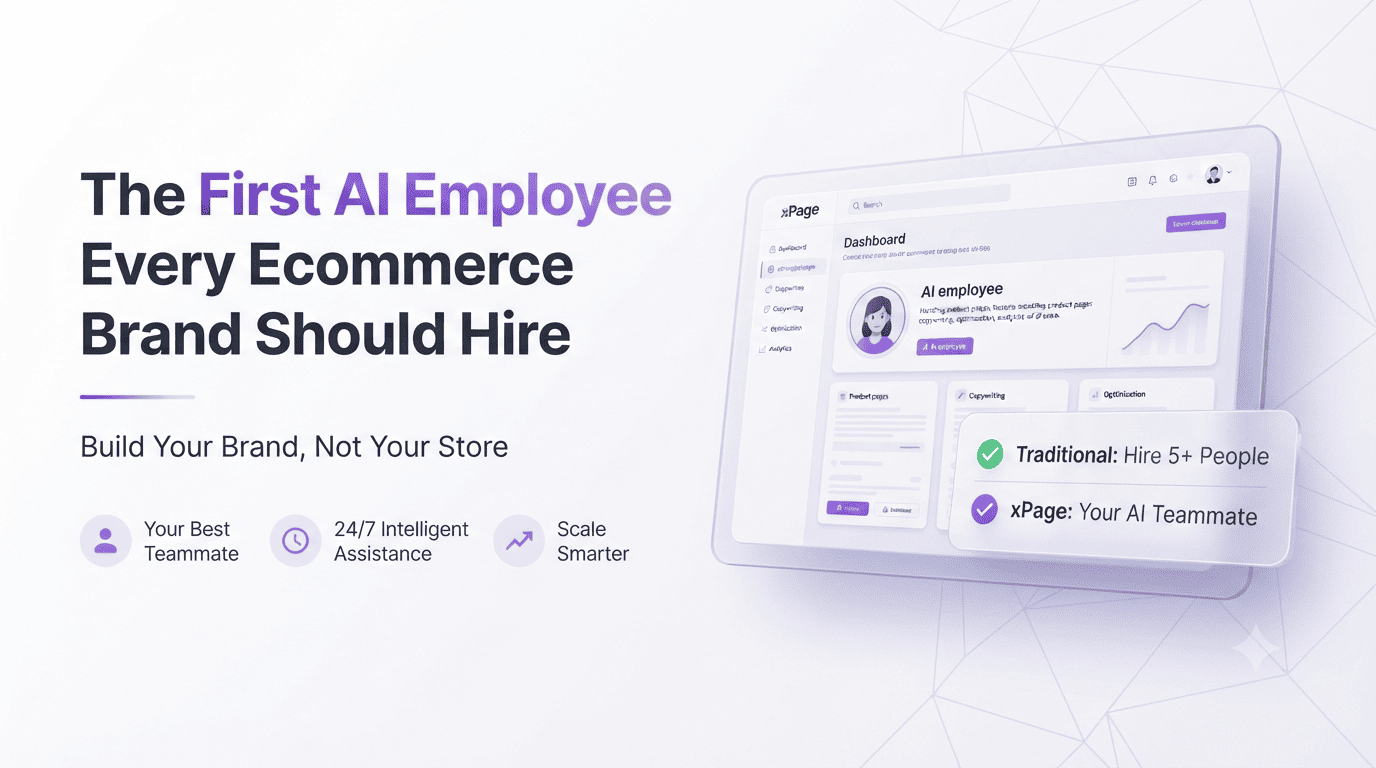
xPage was designed as an AI-native platform that acts as the first AI employee for ecommerce brands.
Rather than functioning only as another AI store builder, xPage is built to help entrepreneurs create, manage, and grow an entire AI business.
It supports founders throughout every stage of the journey by helping them:
- Develop stronger brands
- Generate compelling messaging
- Build high-converting storefronts
- Create targeted landing pages
- Validate products faster
- Improve customer experiences
- Automate repetitive workflows
- Analyze performance
- Recommend strategic improvements
- Continuously optimize for growth
Instead of forcing merchants to become experts in every discipline, xPage brings intelligent assistance into the workflow itself.
It becomes a teammate that never stops learning, analyzing, and helping.
This represents a new category of AI ecommerce platform.
One designed not around pages.
Not around templates.
Not around plugins.
But around helping entrepreneurs build sustainable businesses.
Because the goal isn't simply launching another website.
It's creating an organization capable of learning, adapting, and growing continuously.
That's what AI-native commerce makes possible.
Conclusion
For decades, entrepreneurs have accepted a simple reality:
Building an ecommerce business requires assembling a team of specialists.
Designers.
Developers.
Marketers.
Analysts.
Copywriters.
Strategists.
Support representatives.
Operations managers.
Artificial intelligence doesn't eliminate the need for talented people.
What it changes is how work gets done.
AI is becoming the first employee many businesses will "hire" because it contributes across multiple functions, accelerates execution, and enables founders to focus on leadership instead of repetitive operations.
The companies that succeed in the coming years won't necessarily be those with the biggest teams.
They'll be the ones that combine human creativity with intelligent systems capable of learning, adapting, and improving every day.
AI isn't just another productivity tool.
It's becoming an operating partner.
A collaborator.
A teammate.
And perhaps the most valuable first hire an ecommerce brand can make.
Ready to Hire Your First AI Employee?
If you're ready to move beyond templates, disconnected tools, and repetitive workflows, it's time to rethink what an ecommerce platform should do.
xPage is built to be more than an AI-powered website builder. As an AI-native platform, it acts as the first AI employee for ecommerce brands—helping entrepreneurs build stronger brands, launch faster, automate intelligently, and optimize continuously.
Because the future of ecommerce isn't about managing more tools.
It's about working alongside intelligent systems that help your business grow every day.
Build Your Brand, Not Your Store.