
The AI Ecommerce Stack Every Online Store Needs in 2026
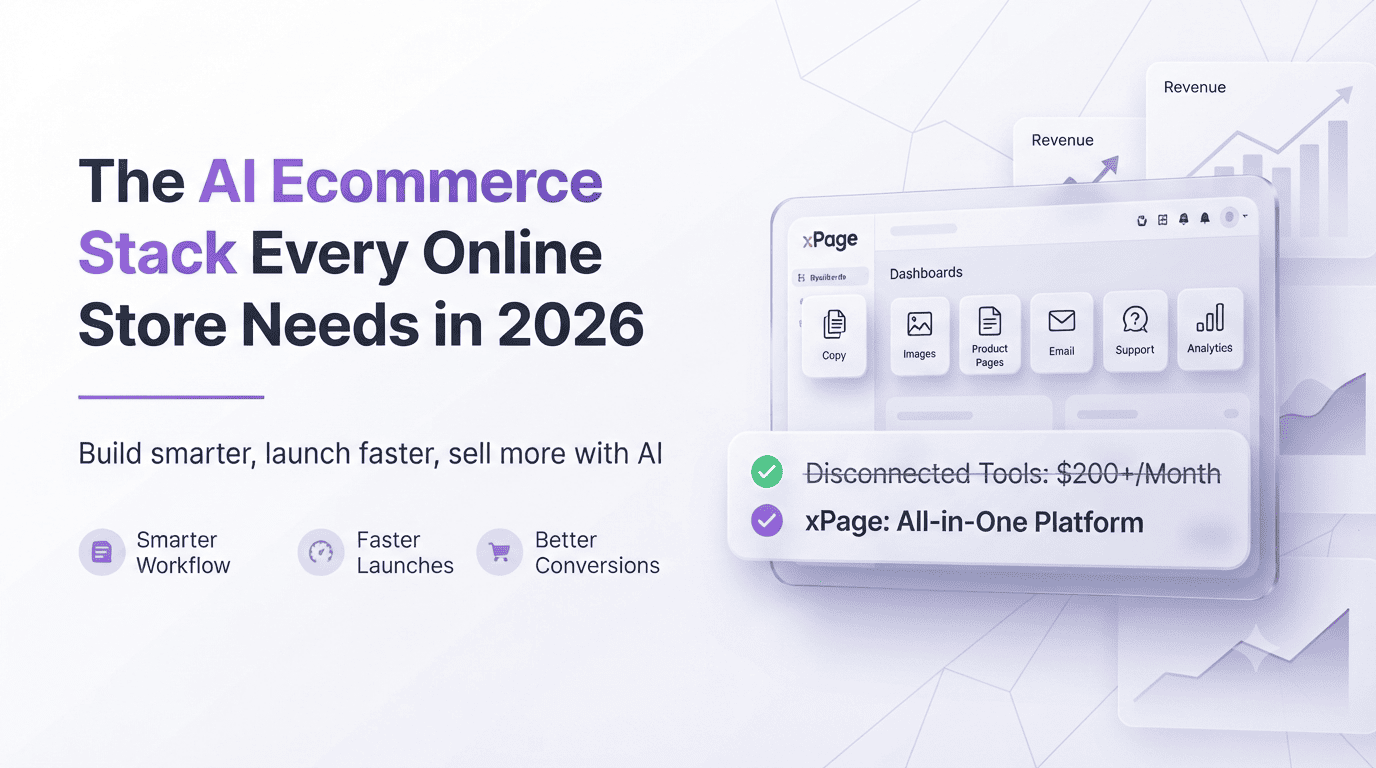
The AI Ecommerce Stack Every Online Store Needs in 2026
If you run an online store in 2026, you already know how quickly ecommerce is changing.
AI is everywhere now. It writes product copy, generates images, helps with support, builds pages, powers marketing, and even helps merchants decide what to sell next.
That sounds exciting, and it is.
But it also creates a new problem.
A lot of stores are now running on too many disconnected ai tools for ecommerce. One tool handles product descriptions, another handles ads, another handles email, another handles support, another handles analytics, another handles landing pages, another handles upsells, another handles reviews, and another handles SEO. Before long, the stack becomes messy, expensive, and hard to manage.
That is why more merchants are now looking for a cleaner ai ecommerce platform that can support the full workflow without turning store management into a second job.
This article breaks down what actually matters in the AI ecommerce stack, why merchants are rethinking the way they build stores, and how xPage gives sellers a simpler way to launch and grow with AI.
TL;DR
If you're building an ecommerce business in 2026, here's the short version:
- Most stores are using too many disconnected e commerce ai tools.
- The best ai tools for ecommerce should reduce friction, not create more work.
- A strong ai ecommerce platform should support store creation, product pages, and conversion.
- ai ecommerce marketing only works when the store itself is built to sell.
- The best ai for ecommerce is the one that helps merchants launch faster and convert better.
- xPage is an ai based ecommerce platform built for merchants who want a simpler, faster way to create stores that actually perform.
AI: Why Merchants Are Rethinking Their Tool Stack
AI has changed the way online stores get built.
What used to take hours of manual work can now happen in minutes. You can generate product descriptions, draft ad copy, create landing pages, brainstorm offers, automate support, and speed up research. For merchants, especially dropshippers and fast-moving ecommerce sellers, that is a huge advantage.
But there is a catch.
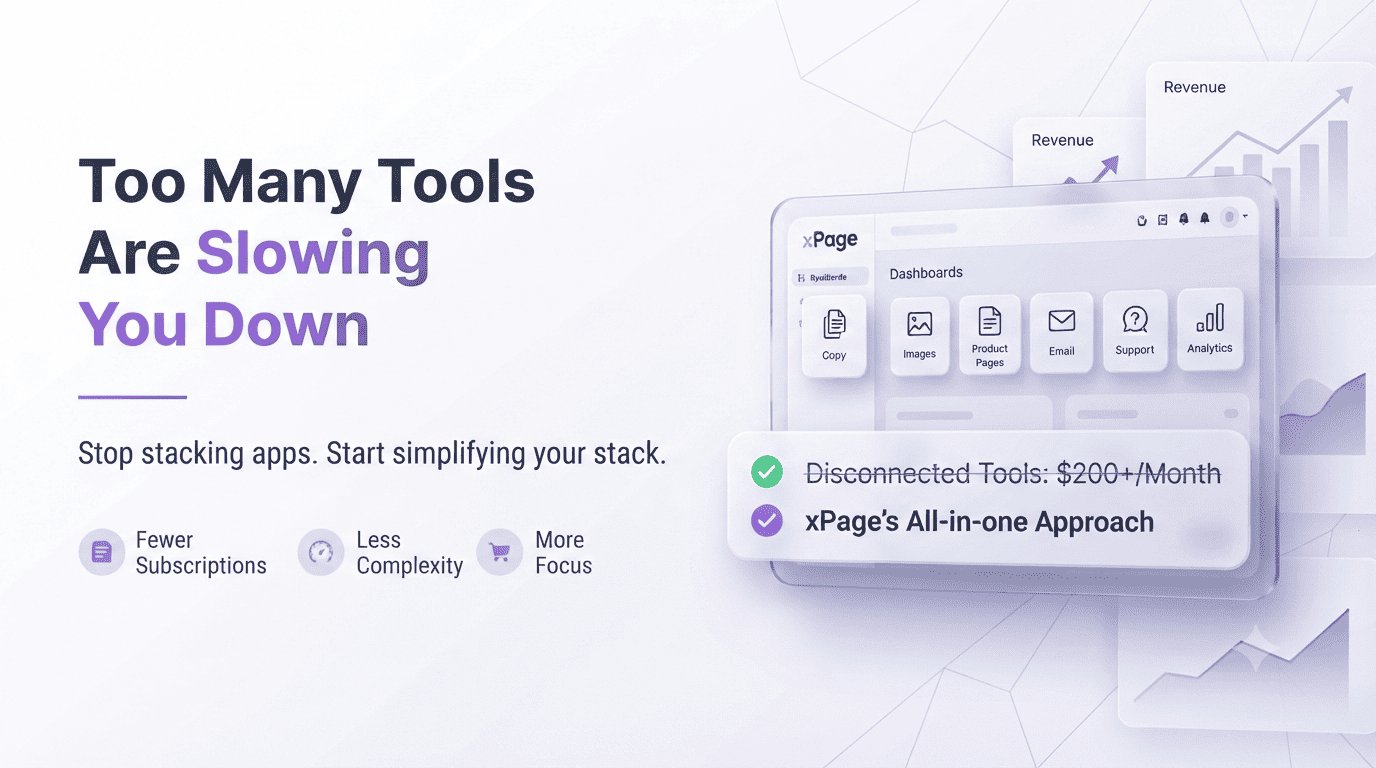
Most merchants are not struggling because they lack AI. They are struggling because they have too much of it spread across too many tools.
That is where the phrase ai tools for ecommerce starts to matter.
The market is full of tools that solve one small problem very well. That sounds useful at first. But once you start stacking them together, the workflow gets complicated. You end up switching between dashboards, connecting apps, managing subscriptions, troubleshooting integrations, and losing momentum.
And momentum matters in ecommerce.
If you are testing products, launching campaigns, or building a new brand, you need speed and clarity. You need a workflow that helps you move from idea to live store without friction.
That is why merchants are now paying closer attention to the best ai tools for ecommerce and asking a better question: which tools actually help me sell, not just create content or automate tasks?
That is the real standard.
Store Creation: What the Right AI Ecommerce Platform Should Handle
Store creation is where many merchants lose time.
They start with a product idea, then open a builder, then customize a theme, then install apps, then write copy, then adjust layouts, then test mobile, then fix checkout, then add more tools. By the time the store is ready, the product trend may already be cooling off.
That is why the right ai ecommerce platform matters so much.
A good platform should help merchants move quickly from concept to launch. It should make store creation feel simple. It should reduce the number of steps between product idea and live page. It should support the actual way ecommerce sellers work.
That means the platform should help with things like:
- Product page generation
- Landing page creation
- Offer presentation
- Mobile-friendly layouts
- Fast publishing
- Conversion-focused structure
- Easy updates
- Simple testing
This is where many merchants start looking for an ai based ecommerce platform instead of a generic website builder.
They do not just want a page. They want a store that is ready to sell. They want a workflow that supports product launches. They want a system that helps them move fast without getting buried in setup.
That is also why the phrase best ai for ecommerce is becoming more common.
Merchants are no longer asking whether AI can help. They are asking whether AI can help in the right place.
The answer should be yes, especially during store creation.
Because if the store is hard to build, everything else becomes harder too.
What merchants actually need during store creation
A strong AI ecommerce workflow should help with:
- Turning a product idea into a live page quickly
- Writing clear product copy
- Structuring the page for selling
- Keeping the setup simple
- Reducing the need for extra software
- Helping merchants launch without delay
That is the kind of workflow modern sellers need.
Not more complexity.
More momentum.
Ecommerce: Why Conversion Performance Matters More Than Feature Count
A lot of merchants get distracted by features.
That is understandable.
AI tools are often marketed with long lists of capabilities: generate copy, create images, automate emails, build funnels, optimize SEO, write ads, analyze behavior, and support customers. All of that sounds useful, and some of it is useful.
But in ecommerce, features do not pay the bills by themselves.
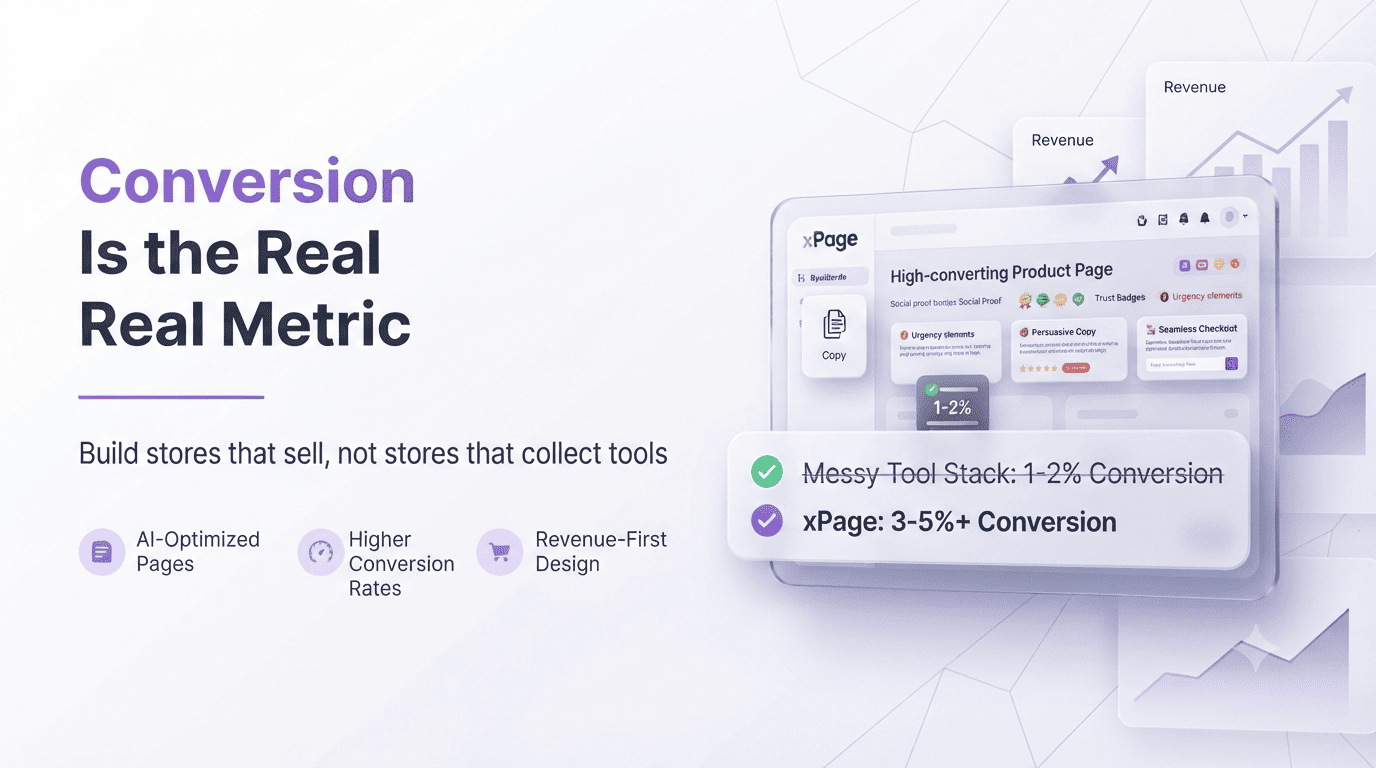
Conversion does.
That is why ai ecommerce marketing should never be treated as a separate activity from the store itself.
If your ads are strong but your product page is weak, you lose. If your email campaign is good but your offer is unclear, you lose. If your traffic is growing but your page does not build trust, you lose.
The store has to do its job.
It has to explain the product clearly. It has to show value quickly. It has to reduce hesitation. It has to make the buying decision feel easy.
That is where many e commerce ai tools fall short.
They help with one part of the process, but not the full buying experience.
And that matters because ecommerce is not just about getting traffic. It is about turning traffic into revenue.
What actually drives conversions
A store that converts well usually does a few things consistently:
- It makes the product easy to understand
- It highlights the main benefit quickly
- It builds trust with clear messaging
- It keeps the page focused
- It supports mobile shoppers
- It removes unnecessary friction
- It makes the next step obvious
That is why the best ai tools for ecommerce are not just the ones that save time. They are the ones that help merchants create pages that sell.
That is also why the best ai for ecommerce is not simply the tool with the most features. It is the tool that helps merchants create a better buying experience.
Why AI ecommerce marketing needs a strong store foundation
AI can help with marketing in powerful ways. It can generate ad angles, draft email sequences, suggest product hooks, help with audience messaging, and speed up creative testing.
But if the store itself is not built to convert, marketing becomes more expensive than it needs to be.
That is why the store and the marketing workflow need to work together. The page has to match the promise. The offer has to feel clear. The customer journey has to stay simple.
That is the foundation of effective ai ecommerce marketing.
Without that foundation, even good traffic can underperform.
xPage: The AI-Native Ecommerce Solution
This is where xPage fits in.
xPage is built as an AI-native solution for merchants who want to launch faster and sell smarter. It is not just another tool added onto an old workflow. It is an ai based ecommerce platform designed around the way modern sellers actually work.
That matters.
Because merchants do not need more software clutter. They need a cleaner path from product idea to live store.
xPage helps make that possible by focusing on the parts of ecommerce that matter most:
- Fast store creation
- AI-generated product pages
- Conversion-focused layouts
- Simple publishing
- Easier testing
- Less setup friction
Instead of forcing merchants to piece together multiple ai tools for ecommerce, xPage gives them a more direct workflow.
That means less time managing tools, more time launching products, more time testing offers, and more time improving what actually drives sales.
Why xPage works for modern merchants
xPage is especially useful for sellers who want to move quickly without sacrificing quality.
It helps with:
- Product page creation
- Landing page generation
- Offer presentation
- Fast launch cycles
- Ecommerce-focused structure
- AI-assisted content creation
- Simplified store building
That makes it a strong fit for dropshippers, solo founders, product testers, and ecommerce teams that want to stay lean.
If you are searching for the best ai tools for ecommerce, xPage deserves attention because it helps solve the biggest bottleneck in the process: getting a store live and ready to convert.
If you are looking for the best ai for ecommerce, xPage stands out because it is built around selling, not just generating content.
If you want an ai ecommerce platform that supports real store creation, xPage gives you a practical workflow instead of a pile of disconnected features.
And if you are trying to simplify your stack, xPage helps reduce the need for extra e commerce ai tools that slow you down.
What xPage helps merchants do
With xPage, merchants can:
- Turn a product idea into a live page faster
- Build pages that are structured for conversion
- Launch without getting buried in setup
- Keep the workflow simple
- Focus on testing products and offers
- Support ai ecommerce marketing with stronger landing pages
- Build stores that feel ready from day one
That is the kind of AI support ecommerce sellers actually need in 2026.
Why Simplicity Wins in Ecommerce
A lot of merchants think growth comes from adding more tools.
More automation.
More dashboards.
More features.
More subscriptions.
But in practice, growth often comes from simplifying the workflow.
When the store is easier to build, merchants launch faster. When the page is easier to understand, customers buy faster. When the stack is easier to manage, the business becomes easier to scale.
That is why the smartest merchants are not chasing every new tool. They are building a stack that helps them move with clarity.
AI should support that.
Not complicate it.
That is the real opportunity in 2026.
Not just using AI.
Using it in a way that makes ecommerce simpler.
Conclusion
The AI ecommerce stack in 2026 is not about collecting more tools.
It is about building a smarter workflow.
Merchants need ai tools for ecommerce that actually help them launch, sell, and grow. They need an ai ecommerce platform that supports store creation without adding unnecessary friction. They need the best ai tools for ecommerce to do more than generate content. They need the best ai for ecommerce to help them convert. They need ai ecommerce marketing that connects directly to a store built for selling. And they need fewer disconnected e commerce ai tools slowing them down.
That is exactly where xPage stands out.
As an ai based ecommerce platform, xPage helps merchants create product pages, launch stores faster, and focus on what matters most: turning traffic into revenue.
If you want a simpler, faster, more practical way to build with AI in 2026, xPage is built for that job.
Ready to Launch Faster?
Stop wasting time stitching together too many tools.
Build your next ecommerce store or product landing page with xPage, launch in minutes, and focus on growing your business with a cleaner AI workflow.