
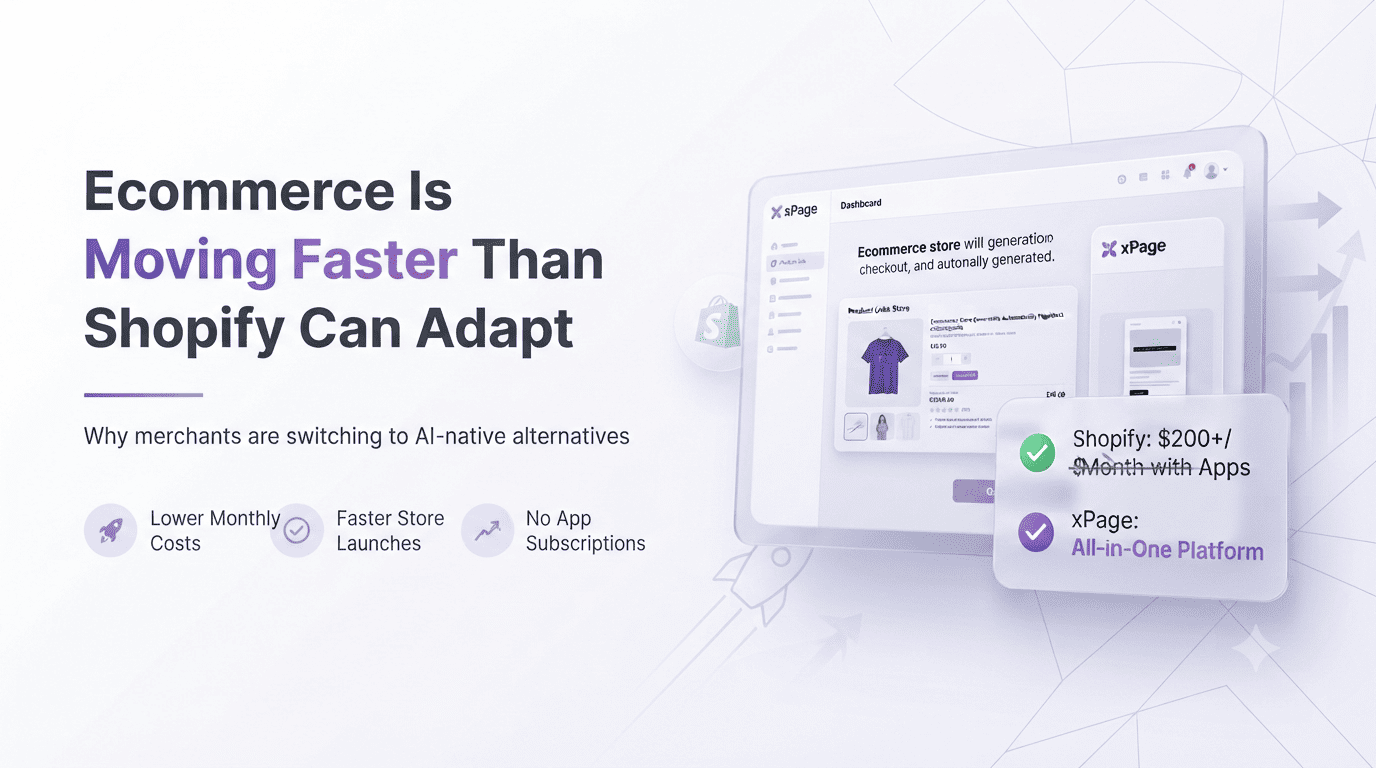
Ecommerce Is Moving Faster Than Shopify Can Adapt
Ecommerce Is Moving Faster Than Shopify Can Adapt
If you've been searching for the best Shopify alternatives, you're not alone.
For years, Shopify has been one of the most popular eCommerce platforms in the world. It helped millions of businesses launch online stores and build successful brands.
But the way people sell online has changed.
Modern sellers want to launch products faster, test ideas quickly, and spend less time managing software. Instead, many merchants discover that running a Shopify store means paying for themes, installing dozens of apps, and managing a growing list of monthly subscriptions before they can fully optimize their business.
That's why more entrepreneurs are searching for a better Shopify alternative.
The question isn't whether Shopify is a good platform.
The question is whether it's still the fastest and simplest way to build an online business in 2026.
For many sellers, the answer is no.
AI is changing how stores are built, products are launched, and customers buy online.
This is where AI-native platforms like xPage are changing the future of eCommerce.
TL;DR
If you're researching Shopify alternatives, here's what really matters:
- Shopify becomes expensive as your business grows.
- Apps and subscriptions create unnecessary complexity.
- The best alternative to Shopify should reduce setup time, not add more software.
- Conversion matters far more than platform features.
- xPage combines AI-powered store creation with a workflow built specifically for modern eCommerce sellers.
Why Merchants Are Looking for Shopify Alternatives
Shopify remains a powerful platform.
There is a reason millions of businesses use it.
But many merchants eventually run into the same frustrations.
Monthly subscription costs.
Premium themes.
Paid apps.
Checkout customization limitations.
Third-party integrations.
Constant software management.
None of these issues seem significant individually.
Together, they create a workflow that becomes increasingly expensive and difficult to manage.
Many businesses begin with a simple store.
Over time, they add:
- Review apps
- Upsell tools
- Bundle applications
- Email marketing software
- Landing page builders
- Analytics platforms
- Subscription apps
- Loyalty programs
Before long, the business depends on an entire ecosystem of third-party software.
That means more updates.
More maintenance.
More monthly bills.
This growing complexity is one of the biggest reasons sellers are looking for alternatives to Shopify.
The platform itself isn't the problem.
The ecosystem surrounding it often is.
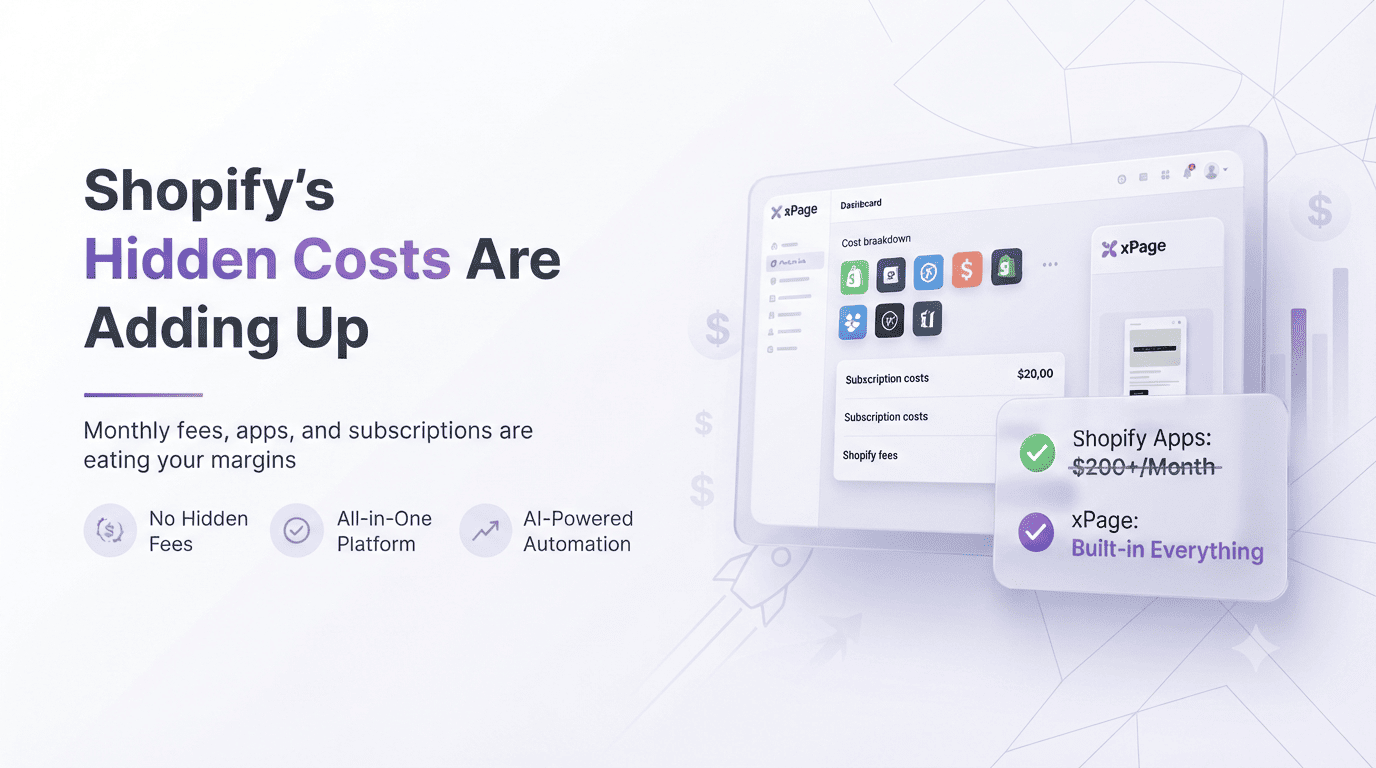
The Hidden Cost of Running a Shopify Store
Most people compare platforms using monthly subscription prices.
That rarely tells the whole story.
The real cost usually appears after launch.
Many merchants eventually invest in:
- Premium themes
- Paid applications
- Marketing software
- Checkout enhancements
- Product review systems
- Upsell tools
- Automation platforms
Every new feature often requires another subscription.
While each tool may seem affordable, the combined monthly cost grows surprisingly fast.
There is also the cost of time.
Installing apps.
Configuring integrations.
Troubleshooting compatibility issues.
Learning new interfaces.
Managing updates.
All of that takes attention away from the thing that actually grows a business:
Selling products.
This is why many entrepreneurs eventually begin searching for Shopify alternatives that simplify their workflow rather than expanding it.
What Makes a Good Shopify Alternative?
Not every alternative to Shopify is automatically better.
Replacing one complicated platform with another doesn't solve anything.
The best platforms share a few important characteristics.
They reduce friction.
They simplify workflows.
They eliminate unnecessary software.
They help merchants launch faster.
Most importantly, they help sellers focus on customers instead of technology.
A modern eCommerce platform should make it easier to:
- Build product pages
- Launch stores quickly
- Test products faster
- Improve conversions
- Scale without adding dozens of extra tools
That is a much better measure of quality than simply counting features.
Features don't generate revenue.
Execution does.
Why Speed Is Becoming the Biggest Competitive Advantage
The pace of eCommerce has changed dramatically.
Winning products appear overnight.
Social media trends move within days.
Advertising costs fluctuate constantly.
Businesses that spend weeks building stores often miss opportunities before they even launch.
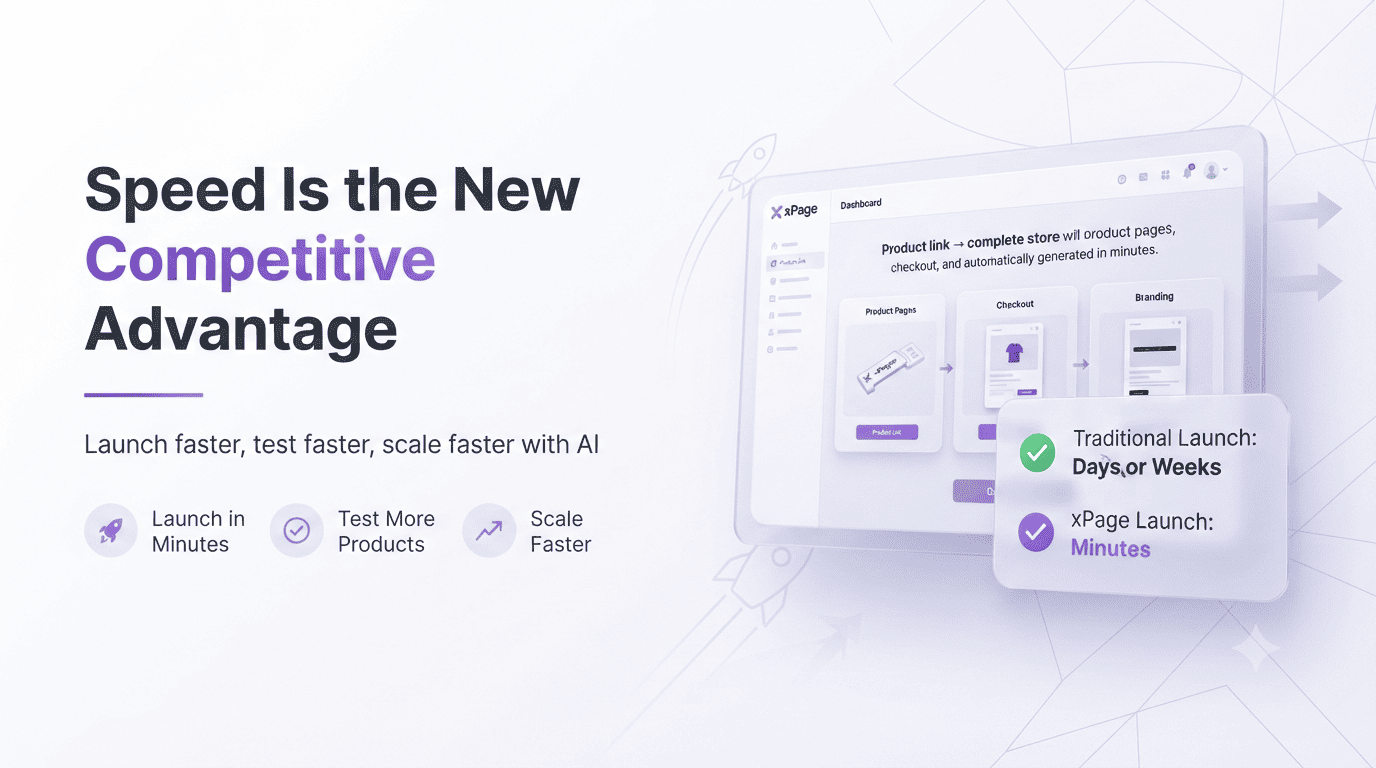
Modern merchants need platforms that reduce time between product discovery and product launch.
Instead of spending days customizing pages, successful sellers want to:
Find a product.
Build the page.
Publish.
Start testing.
Improve based on real customer behavior.
Repeat.
That cycle creates momentum.
Long setup processes create delays.
Why Conversion Performance Matters More Than Platform Features
One of the biggest mistakes new merchants make is comparing platforms by feature lists.
More features do not automatically create more sales.
Customers never purchase because your platform has hundreds of integrations.
They purchase because your store communicates value clearly.
A profitable store usually focuses on four things.
Clear messaging.
Fast loading pages.
Simple buying experiences.
Strong product presentation.
Everything else supports those fundamentals.
A beautifully designed website with weak messaging will often lose to a simple landing page with excellent copy and a compelling offer.
That is why experienced eCommerce sellers focus less on software and more on conversion optimization.
The platform should help you sell.
Not distract you with endless customization.
AI Is Changing Store Creation
Artificial intelligence is changing nearly every part of online selling.
Instead of manually designing every section of a website, AI can now generate:
- Product pages
- Landing pages
- Headlines
- Product descriptions
- Store layouts
- Calls-to-action
- Conversion-focused content
The result is dramatically faster launches.
Instead of starting from a blank page, merchants begin with a fully structured foundation that can be customized in minutes.
This changes how businesses approach eCommerce.
The focus shifts away from building websites.
The focus becomes launching products.
That difference is significant.
xPage: The AI-Native Shopify Alternative
Most platforms have added AI as another feature.
xPage was built around AI from the very beginning.
Instead of asking sellers to manually design every page, xPage helps generate complete product pages and eCommerce experiences using AI.
Its goal is simple.
Help merchants launch faster.
Instead of spending hours adjusting layouts, sellers can generate pages from product links, customize them quickly, and publish almost immediately.
Because the platform was designed specifically for eCommerce, every workflow centers around selling products instead of building websites.
This makes xPage one of the strongest Shopify alternatives for entrepreneurs who value speed and simplicity.
More Than Just Another Website Builder
Many alternatives to Shopify simply recreate the same experience with different pricing.
You still install plugins.
You still manage themes.
You still build pages manually.
You still spend hours configuring software.
xPage takes a different approach.
AI becomes the starting point.
Store creation becomes dramatically faster.
Product testing becomes easier.
Landing pages become conversion-focused by default.
Instead of managing technology, merchants spend more time validating products, creating content, and growing revenue.
That is the real advantage of an AI-native platform.
Who Should Consider xPage?
xPage is an excellent choice for merchants who want to simplify their business without sacrificing performance.
It is especially valuable for:
- New entrepreneurs launching their first online store
- Dropshippers testing products every week
- One-product stores
- Digital marketers
- Content creators selling products
- Brands focused on fast launches
- Businesses looking for modern Shopify alternatives
- Sellers searching for a flexible Shopify alternative powered by AI
Whether you're replacing Shopify or launching your first store, xPage reduces unnecessary complexity and helps you focus on selling instead of configuring software.
Why Free Shopify Alternatives Aren't Always Better
Many sellers search for free Shopify alternatives hoping to eliminate costs entirely.
Free tools can be useful for learning.
However, many eventually introduce limitations such as:
- Platform branding
- Restricted features
- Limited customization
- Upgrade requirements
- Additional transaction fees
Choosing software based only on price often leads to more frustration later.
The better question isn't:
"Which platform is free?"
The better question is:
"Which platform helps me reach profitability faster?"
That is where AI-driven workflows become far more valuable than simply choosing the lowest monthly subscription.
The Future of eCommerce Is AI-First
The next generation of online stores won't be built the same way they were five years ago.
Merchants are moving away from software stacks filled with dozens of subscriptions.
Instead, they're choosing platforms that automate repetitive work, simplify launches, and improve conversion performance.
AI is no longer an optional feature.
It is becoming the foundation of modern eCommerce.
The businesses that adapt first will spend less time building stores and more time growing them.
Conclusion
There will always be businesses that thrive on Shopify.
But many modern merchants want something different.
They want fewer subscriptions.
Less complexity.
Faster launches.
Better conversions.
That is exactly why interest in Shopify alternatives, Shopify alternative, alternatives to Shopify, alternative to Shopify, and free Shopify alternatives continues to grow.
Among the new generation of eCommerce platforms, xPage stands out because it wasn't designed as another traditional website builder.
It was built as an AI-powered commerce platform that helps entrepreneurs launch stores faster, generate conversion-focused pages, and spend more time selling instead of managing software.
If you're looking for a modern Shopify alternative built for the future of eCommerce, xPage is one of the strongest options available today.
The future belongs to sellers who move faster, test smarter, and let AI handle the repetitive work.
Ready to Launch Faster?
Stop spending your time managing apps and subscriptions.
Build your next AI-powered eCommerce store or product landing page with xPage, launch in minutes, and focus on what actually grows your business.