
AI Doesn't Build Websites. It Builds Businesses.
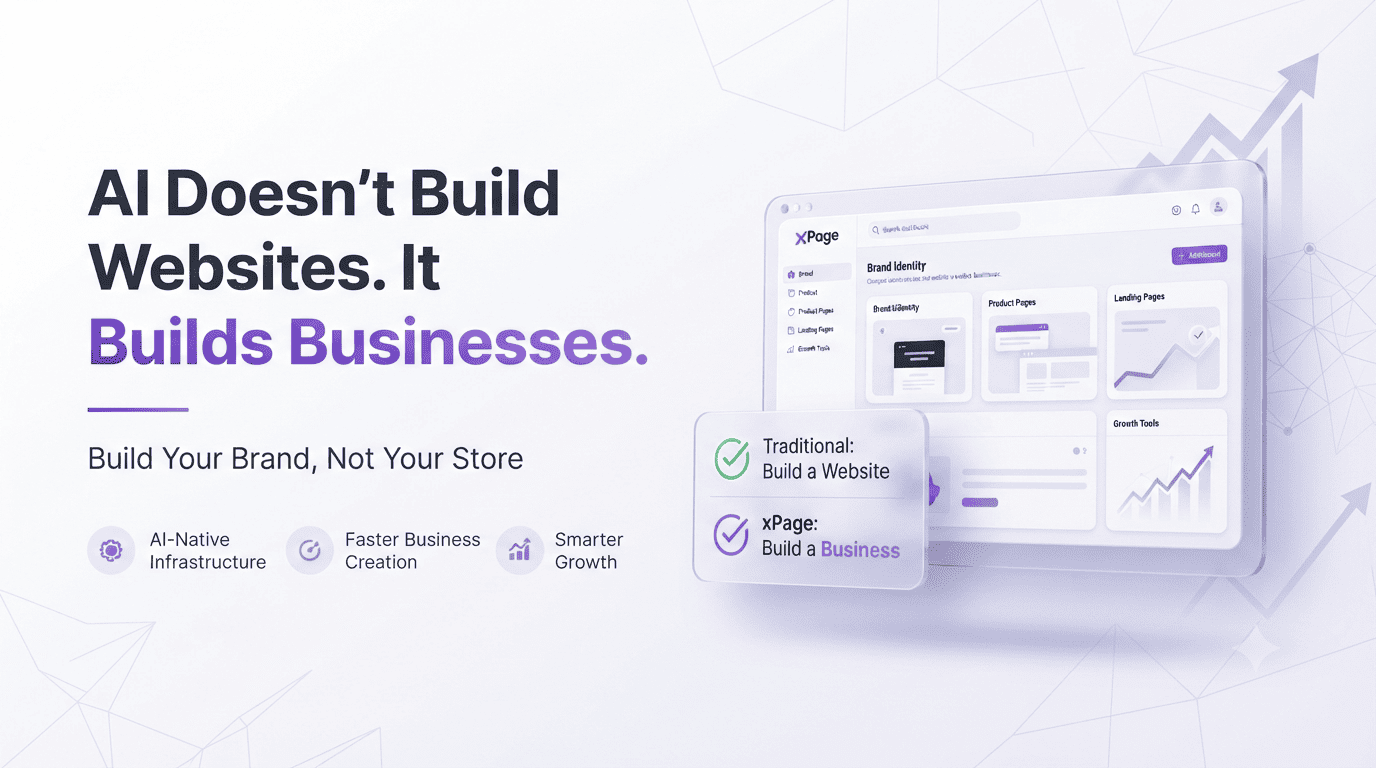
AI Doesn't Build Websites. It Builds Businesses.
Artificial intelligence is often described as the next evolution of ecommerce. Yet much of the conversation still revolves around a surprisingly narrow idea: AI as a faster way to write product descriptions, generate images, or build websites.
That perspective misses the bigger transformation taking place.
AI isn't simply changing how online stores are built.
It's changing how businesses are created.
For years, launching an ecommerce company demanded an overwhelming combination of technical knowledge, creative talent, marketing expertise, operational experience, and significant financial investment. Entrepreneurs needed designers, developers, copywriters, marketers, SEO specialists, media buyers, analysts, and branding experts just to compete.
Today, AI is compressing that entire process.
Modern entrepreneurs are no longer limited by execution capacity. Instead, they're empowered to spend more time thinking strategically while AI accelerates many of the repetitive, technical, and time-consuming tasks required to build and grow an online business.
This shift marks the beginning of a new era of AI ecommerce—one where AI isn't another feature inside an ecommerce platform but becomes the operating system that helps entrepreneurs create, launch, improve, and scale businesses.
The future isn't about building websites.
It's about building businesses.
1. Introduction: AI Isn't Another Ecommerce Tool
Every major technology wave changes how businesses operate.
The internet connected customers.
Cloud software simplified operations.
Mobile commerce made shopping accessible everywhere.
Artificial intelligence is different.
Rather than adding another tool to an entrepreneur's workflow, AI has the potential to reshape the workflow itself.
Many businesses currently use AI to:
- Generate product descriptions
- Create advertising copy
- Design logos
- Produce product images
- Write emails
- Suggest marketing ideas
These are useful capabilities.
But they're only the beginning.
The real opportunity lies in treating AI as a strategic partner rather than a content generator.
Instead of asking AI to create isolated assets, entrepreneurs can increasingly rely on AI to connect the entire business-building process—from ideation and branding to customer acquisition, optimization, and long-term growth.
This is what defines the next generation of AI ecommerce platforms.
2. The Old Way of Building an Ecommerce Business
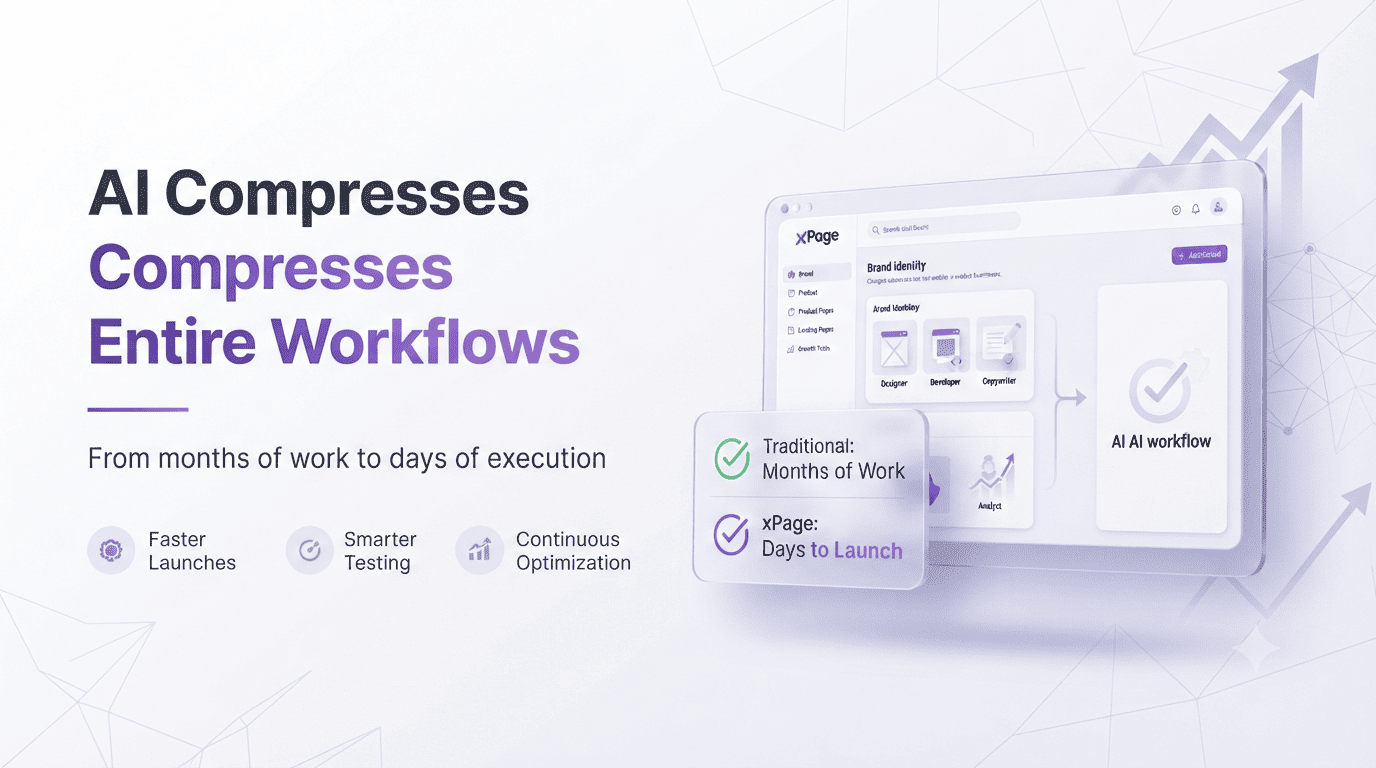
Not long ago, building an ecommerce business followed a long, fragmented process.
Entrepreneurs typically spent months coordinating specialists before they could even launch.
The traditional workflow often looked like this:
- Research a market
- Validate an idea
- Find suppliers
- Develop a brand identity
- Hire a designer
- Hire a developer
- Build a website
- Write product descriptions
- Configure payments
- Create landing pages
- Set up analytics
- Learn SEO
- Launch advertising campaigns
- Test conversion rates
- Improve messaging
- Analyze customer behavior
- Repeat continuously
Each stage required different skills.
Each delay increased costs.
Each mistake slowed momentum.
Even experienced founders needed significant resources to move from idea to execution.
Small businesses often found themselves competing against organizations with dedicated teams for every discipline.
Success depended not only on having a good idea but also on having the time, expertise, and budget to execute consistently.
Building an AI business changes that equation.
3. AI Compresses the Entire Workflow
Artificial intelligence doesn't simply automate individual tasks.
It compresses entire workflows.
Instead of completing one isolated activity, AI connects multiple stages of business creation into a faster, more intelligent process.
Consider how an entrepreneur might launch today.
Instead of spending weeks creating assets manually, AI can help:
- Research market opportunities
- Analyze competitors
- Identify customer pain points
- Generate brand concepts
- Create visual identities
- Produce persuasive copy
- Build landing pages
- Structure an online store
- Recommend pricing strategies
- Suggest promotional campaigns
- Optimize product pages
- Analyze customer behavior
- Recommend ongoing improvements
This changes entrepreneurship fundamentally.
Execution becomes dramatically faster.
Iteration becomes dramatically easier.
Testing becomes dramatically cheaper.
Entrepreneurs no longer need months before receiving meaningful customer feedback.
They can launch earlier, learn faster, and improve continuously.
That's where AI ecommerce creates its greatest value—not by eliminating work, but by accelerating learning.
4. AI Is Creating a New Generation of Entrepreneurs
Historically, entrepreneurship favored people with specialized skills.
Developers built websites.
Designers built brands.
Marketers acquired customers.
Copywriters wrote persuasive messaging.
Business owners coordinated everyone else.
Artificial intelligence is changing these roles.
Today's entrepreneurs can focus more heavily on decision-making while AI assists with execution.
This creates entirely new possibilities.
Instead of asking:
"Can I build this?"
Entrepreneurs ask:
"Should I build this?"
That's a much more valuable question.
AI reduces technical barriers while increasing strategic opportunities.
Rather than replacing founders, AI enables more people to become founders.
This democratization expands innovation.
More experiments happen.
More businesses launch.
More ideas reach customers.
The entrepreneurs who succeed won't necessarily be those with the largest teams.
They'll be those who ask better questions, understand customers more deeply, and use AI to execute intelligently.
5. AI Doesn't Replace Creativity—It Amplifies It
One common misconception is that AI removes creativity from entrepreneurship.
The opposite is becoming true.
Creativity has always been constrained by execution.
A founder might imagine ten campaigns but only have time to launch one.
They might envision five branding directions but only afford to test one.
AI changes those limitations.
It enables entrepreneurs to explore more ideas, compare more concepts, and iterate more quickly.
Instead of replacing human creativity, AI multiplies it.
Human creativity still determines:
- Brand vision
- Customer empathy
- Product direction
- Long-term strategy
- Company values
- Business positioning
AI strengthens execution by helping entrepreneurs bring those ideas to life faster.
Creativity remains the competitive advantage.
AI simply increases its reach.
6. Why AI Changes Store Creation
For years, ecommerce platforms competed on features.
Themes.
Templates.
Apps.
Integrations.
Customization.
While these capabilities remain valuable, they don't solve the biggest challenge.
Building a website has never guaranteed building a business.
An AI website builder should do far more than arrange sections on a page.
It should understand business goals.
A modern AI store builder should help entrepreneurs answer questions like:
- Who is my ideal customer?
- What differentiates my brand?
- Which products deserve promotion?
- Which landing page converts best?
- Which offer should I test next?
- Why are customers abandoning checkout?
- How can my messaging improve?
- Which audience should I target?
Store creation becomes one step inside a much larger business-building system.
The most valuable AI ecommerce platform won't simply create beautiful storefronts.
It will continuously help merchants improve performance after launch.
Instead of static websites, businesses gain adaptive systems that evolve alongside customer behavior.
That's a fundamentally different vision of ecommerce.
7. The Future Belongs to AI-Native Businesses
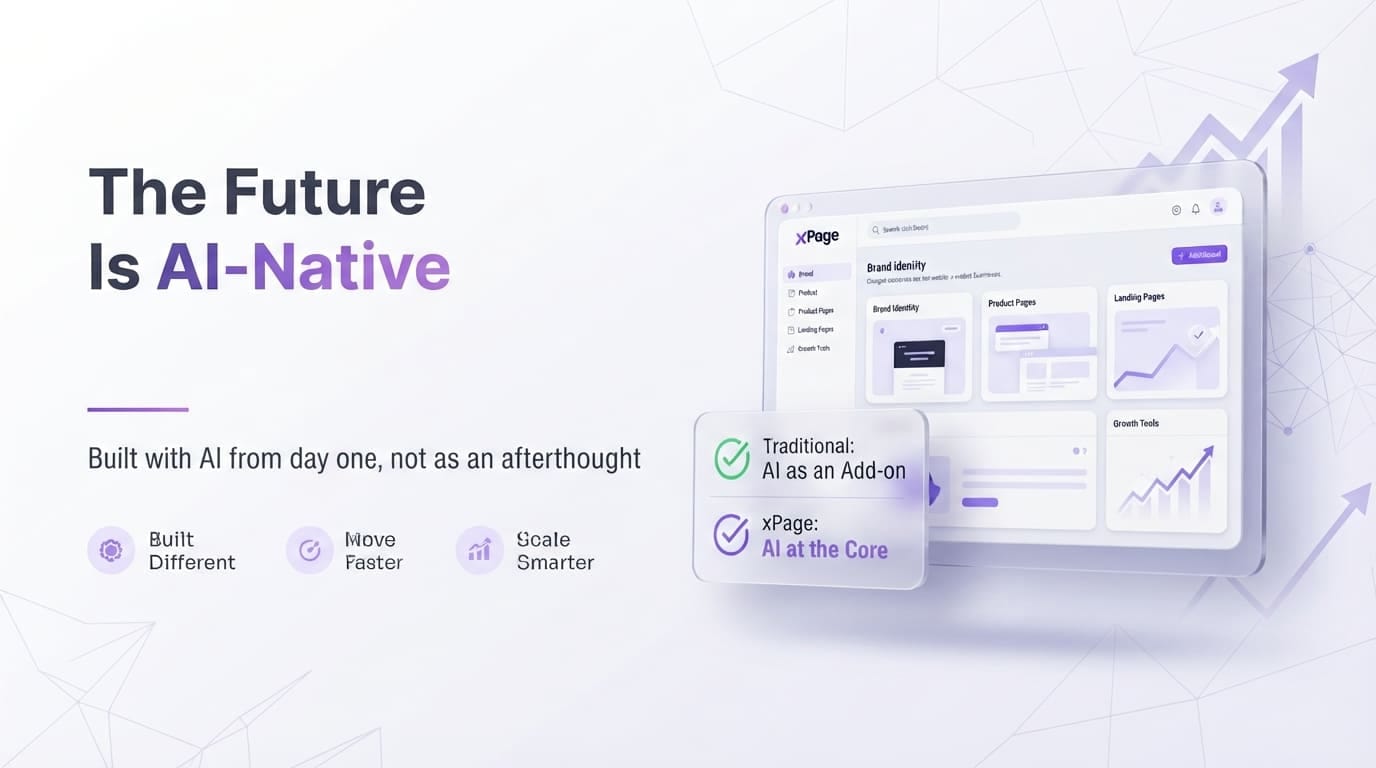
Every major technological shift creates a new generation of companies.
Cloud computing created cloud-native businesses.
Mobile transformed customer experiences.
Artificial intelligence is creating AI-native businesses.
An AI-native business doesn't just use AI occasionally.
It embeds AI throughout the organization.
AI supports:
- Product research
- Brand development
- Website generation
- Customer service
- Marketing
- Analytics
- Conversion optimization
- Decision-making
- Growth experimentation
This doesn't eliminate human leadership.
It strengthens it.
Founders spend less time performing repetitive tasks and more time making strategic decisions.
As AI capabilities continue advancing, competitive advantage will shift away from execution speed alone.
Instead, success will depend on how effectively entrepreneurs collaborate with AI to build stronger brands, create better customer experiences, and adapt more quickly than competitors.
The future of AI ecommerce belongs to businesses that treat AI as infrastructure—not merely as software.
8. Why xPage Exists
The ecommerce industry doesn't need another platform that simply generates websites.
It needs platforms that help entrepreneurs build successful businesses.
That's why xPage was created.
xPage is an AI-native platform designed around business creation rather than website creation.
Instead of asking users to manually assemble dozens of disconnected tools, xPage brings AI into every stage of the entrepreneurial journey.
From the first business idea to ongoing optimization, xPage helps entrepreneurs move faster while making better decisions.
With xPage, merchants can:
- Build stronger brands from the beginning
- Generate high-converting store experiences
- Create compelling landing pages
- Develop consistent messaging
- Launch products more efficiently
- Test ideas rapidly
- Optimize continuously using AI insights
- Scale confidently as customer needs evolve
Rather than functioning solely as an AI website builder, xPage is designed to become the operating system behind a modern AI business.
It combines intelligent automation with strategic guidance, allowing entrepreneurs to spend less time wrestling with technical complexity and more time creating value for customers.
Because successful businesses are never finished.
They continuously evolve.
And AI should evolve alongside them.
Conclusion
Artificial intelligence is changing ecommerce in ways that extend far beyond automation.
The first generation of AI helped entrepreneurs produce content faster.
The next generation helps entrepreneurs build companies smarter.
The biggest misconception in the market is believing AI exists to generate websites.
Websites are simply one output.
Businesses are the goal.
As AI continues to mature, entrepreneurs will increasingly shift their attention away from repetitive execution and toward vision, customer understanding, innovation, and growth.
The platforms that define the future won't simply generate stores.
They'll help create brands.
They'll identify opportunities.
They'll optimize customer experiences.
They'll accelerate learning.
Most importantly, they'll empower entrepreneurs to focus on what humans do best: solving problems, creating value, and building meaningful businesses.
That's the promise of AI-native commerce.
And that's why the future belongs to entrepreneurs who embrace AI not as another tool—but as the operating system for modern business creation.
Ready to Build the Next Generation of Ecommerce?
If you're looking beyond templates, themes, and one-click websites, it's time to think differently about how businesses are built.
xPage is designed for entrepreneurs who want more than an online store. As an AI-native platform, it helps transform ideas into brands, streamline execution, and continuously optimize for growth.
The future of ecommerce isn't about building websites faster.
It's about building smarter businesses.
Build Your Brand, Not Your Store.